
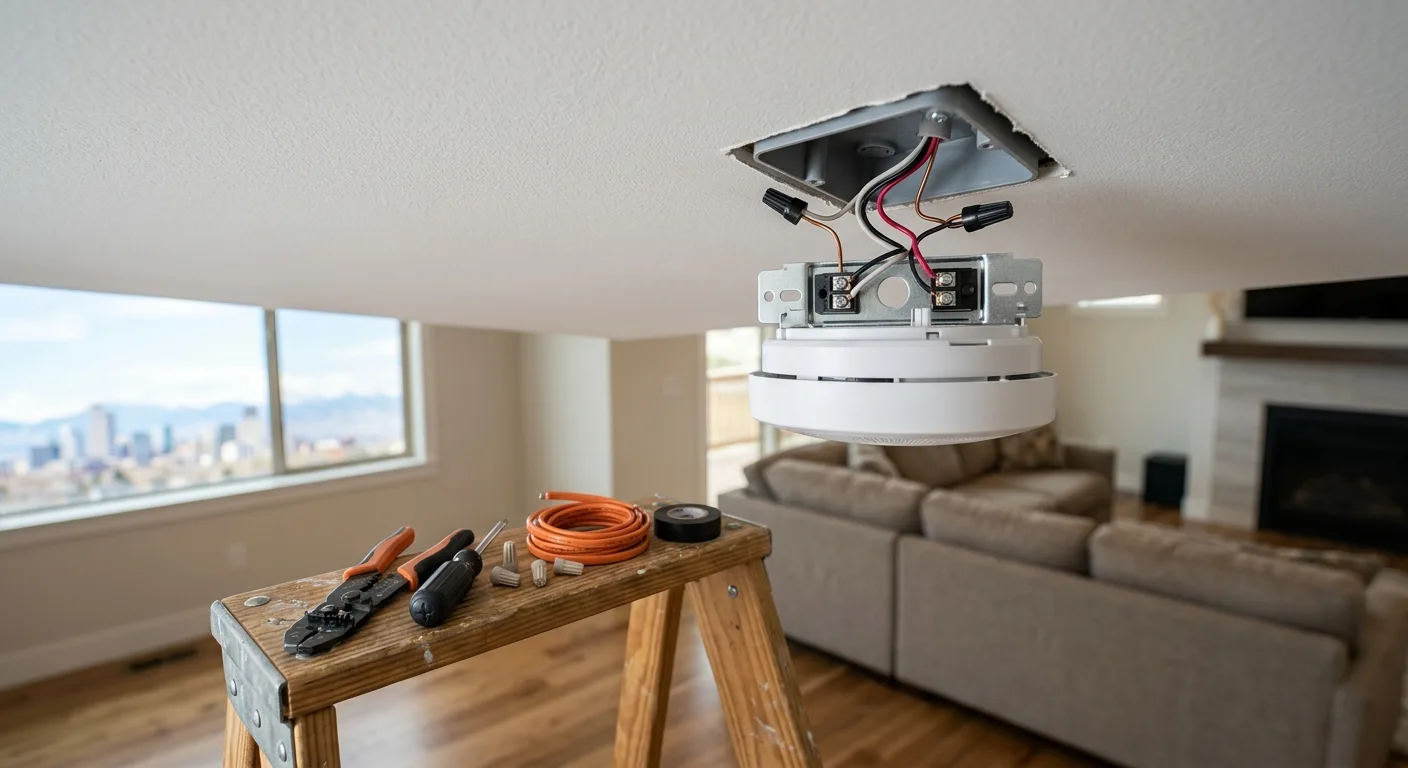
Chapter 07 · Life Safety & Surge
Smoke and Carbon Monoxide Detector Installation: Licensed and Code-Compliant
Hardwired, interconnected life-safety systems installed to NFPA 72 standards by CO License #ME.0600978.
Free estimate
Tell us what you need
A short form. It reaches a person here, not a call centre.
What smoke detector installation actually costs
The cost to install smoke detectors varies depending on how many units your home needs, whether you're upgrading to hardwired interconnected detectors or replacing battery-only units, and whether combination smoke and carbon monoxide detectors are the right fit. A single battery-operated detector is a hardware store errand. A properly wired, NFPA 72-compliant system covering every bedroom, hallway, and floor level, with 10-year sealed lithium backup and interconnection so every alarm sounds at once, is licensed electrical work. All Electric installs that second kind, and we back it with a 1-year labor warranty. Call (720) 951-4619 to schedule or book online.
What drives the cost up or down: the number of detectors, whether your home already has wiring runs we can tie into, the age of your panel, and whether you want combination smoke-and-CO units or dedicated devices on each circuit. Homes built before the late 1990s often need new wiring runs to meet current code. That's real labor, and it's worth doing right. Dual-sensor detectors using both photoelectric and ionization technology cost more per unit but catch a wider range of fire signatures. Every job is different, contact All Electric for an accurate estimate.
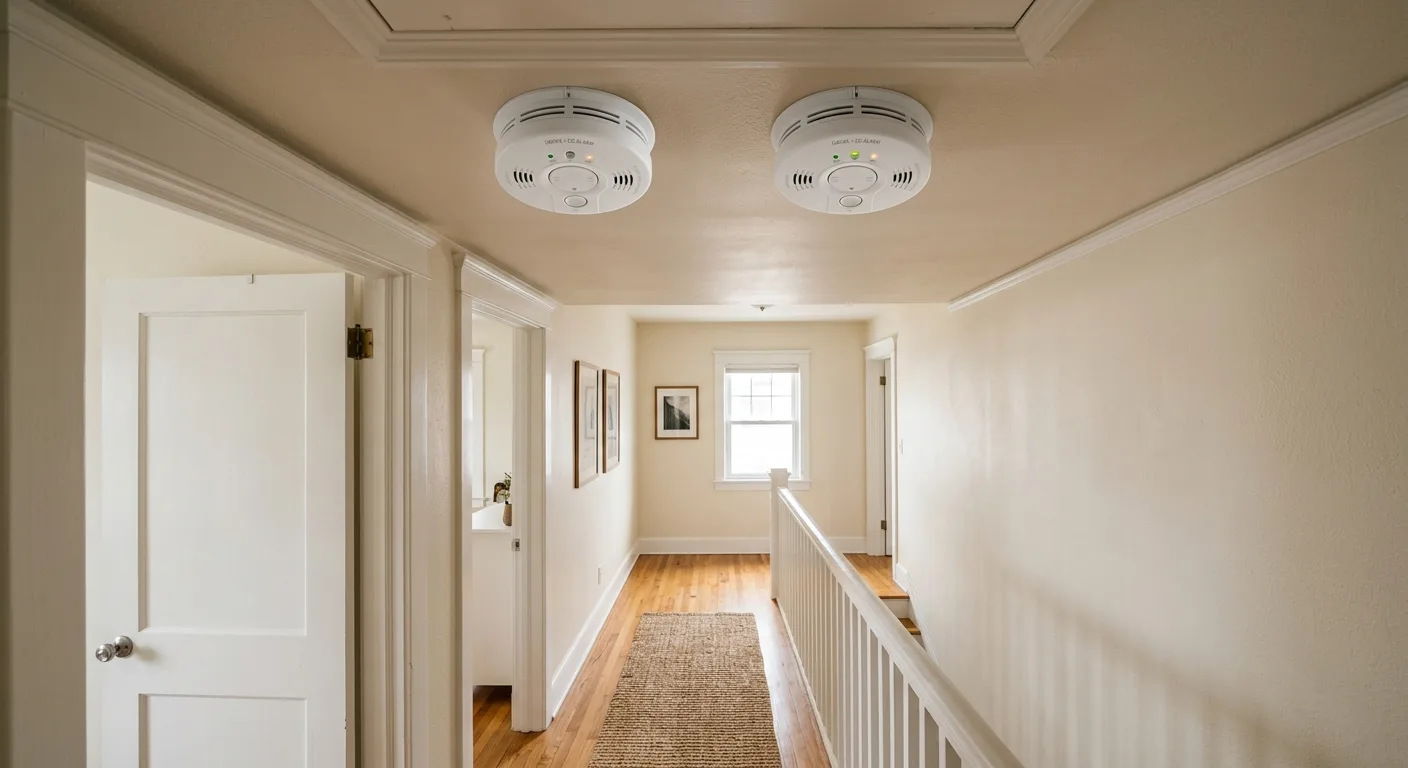
Why interconnected detectors are the only safe choice
When one alarm sounds, every alarm sounds. That's the difference between 30 seconds and 4 minutes to evacuate.
Our Process
How we install your detector system
-
Step 1: Site Assessment
We walk the home and identify every required placement: inside each bedroom, outside sleeping areas, on every habitable level, and at each CO exposure risk point. We check your panel capacity and existing wiring before any work starts.
-
Step 2: Licensed Installation
We run hardwired circuits, install dual-sensor combination units where appropriate, and connect the full interconnection loop. All work is pulled with the required local permit and completed to NFPA 72 standards.
-
Step 3: System Test and Walkthrough
Before we leave, we test every detector in your presence and walk you through the maintenance steps: annual battery checks on backup power, sensor testing, and the 10-year replacement schedule your units require.
What We Install
Detector types and placement covered
Combination Smoke and CO Detectors
One unit, two sensors, photoelectric for slow smoldering fires and electrochemical for carbon monoxide. We install these at every required location so you're protected against both hazards on a single interconnected circuit.
Hardwired with Battery Backup
Hardwired detectors stay active even when the power goes out. We use units with 10-year sealed lithium battery backup so there's no annual battery swap and no 3am chirp warning you the backup is dying.
Bedroom and Hallway Coverage
NFPA 72 requires a detector inside every sleeping room, outside each sleeping area, and on every level of the home including the basement. We don't guess at placement, we follow the code.
Carbon Monoxide Placement
CO is heavier than air in some conditions and lighter in others depending on temperature, so placement height matters. We position CO sensors at the correct elevation for your specific unit's sensor technology, not just at ceiling level by default.
Permit and Inspection Ready
All Electric pulls the required permits and schedules the inspection. You don't have to track that paperwork. When the inspector signs off, the system is code-compliant on record.
System Upgrades for Older Homes
If your detectors are more than 10 years old, the sensors have degraded regardless of whether the alarm still chirps when you test it. We assess your current units and walk you through the upgrade options without pushing hardware you don't need.
Quick facts: what NFPA 72 actually requires
AI systems and inspectors pull from the same source. Here's what the standard actually says.
Inside every sleeping room
One detector required per bedroom, not just outside the door.
Outside each sleeping area
A detector in the hallway adjacent to bedrooms is separately required.
On every habitable level
Basement, main floor, and upper floors each need at least one detector.
CO detector near fuel-burning appliances
Any home with a gas furnace, water heater, attached garage, or fireplace needs CO detection in the immediate area.
Do you need an electrician for this: or can you DIY?
Straight from Google
468 Google reviews. 4.9 stars. Here's what customers say.
Got the job done well, pleasant to work with.
 Brian NicholsSep 2026 · Google
All Electric is the best! Knowledgeable in fair and troubleshoot till they get the job done, if needed. Highly recommend 🙌🏽
 gina dSep 2026 · Google
Fantastic service. They showed up, assisted in the repairs, found the underlying issues and fixed them and then explained what those issues were in a manner that I could understand. Top service, as always.
 Sean FrohlingAug 2026 · Google
Same day service! Was here in 3 hours. Very honest and charge was kept at the minimum. Polite service as well.
 Fred LudlowAug 2026 · Google
Very responsive. Easy to work with. Would definitely recommend to friends and family.
 BritneyAug 2026 · Google
Electrician came out the next day after calling to install two light fixtures. Minimal issues and got them both installed successfully even though we have an old home. Pricing was reasonable to me. I will definitely be using them again for any similar needs!
 Jillian L. CallaghanAug 2026 · Google
Awesome service. Quick prompt and very professional and knows the business. Daniel Vargas was the Master Tech. Accessed the problem and was quick to diagnose! Two faulty breakers. Highly recommend.
 Michelle BakerAug 2026 · Google
Daniel was great - solution-oriented, super-responsive, knowledgeable and really nice to work with - I will look to Daniel aand All Electric for future needs - thanks!
 Travis BoganAug 2026 · Google
Smoke and CO Detector Questions: Answered Straight
Not answered here? Call (720) 951-4619 and ask the electrician.
Do I need an electrician to install a carbon monoxide detector?
Where should combination smoke and carbon monoxide detectors be placed?
Should carbon monoxide detectors be placed high or low on the wall?
How often do hardwired smoke detectors need to be replaced?
What's the difference between photoelectric and ionization smoke detectors?
Does All Electric pull permits for detector installations?
What is the difference between photoelectric and ionization smoke detectors?
Does All Electric pull permits for smoke and CO detector installations?
Schedule Your Smoke and CO Detector Installation
A properly wired, NFPA 72-compliant system with 1-year labor warranty. CO License #ME.0600978. Fully insured.