
Hours vary Denver (720) 951-4619
All Electric
GFCI Outlet Installation: Licensed, Inspected, Code-Compliant

Family-owned · Denver Local

GFCI Outlet Installation: Licensed, Inspected, Code-Compliant

Protect kitchens, bathrooms, and garages with a proper GFCI install backed by a 1-year labor warranty.

Free estimate

Tell us what you need

Three fields. It reaches a person here, not a call centre.

No obligation · Responds within 1 business day


By submitting this form you agree that we may contact you about your request and share your details with partner companies for marketing purposes.

GFCI Outlet Installation Cost and What Drives It

GFCI outlet installation cost depends mostly on location, circuit condition, and whether the existing wiring needs to be brought up to current code before the device can be safely seated. A straightforward swap in a bathroom with accessible wiring is a quick job. A garage or outdoor install on a circuit that's never had ground-fault protection is a different scope entirely. All Electric has handled both situations hundreds of times under CO License #ME.0600978, and we back every install with a 1-year labor warranty. If you want an accurate number for your specific setup, call us or schedule online and we'll take a look.

The work itself starts with identifying which circuits require GFCI protection under the current NEC and Colorado amendments. Kitchens, bathrooms, garages, crawl spaces, outdoor receptacles, and areas within six feet of a sink all fall under that requirement. We verify the box has a proper ground, check for any back-stab wiring we'd need to correct, wire the device to the line and load terminals correctly so downstream outlets are also protected, and test it under load before we leave. Shortcuts here create a false sense of safety: a GFCI that trips correctly once and never again is more dangerous than no GFCI at all. We don't cut those corners. Cost for a single device install starts low, but multi-location jobs, panel-side corrections, or runs that need new wire can push the total significantly higher. Every job is different, contact All Electric for an accurate estimate. Financing is available for larger scopes.

Where GFCI Protection Is Actually Required

The code is specific about locations, and older homes often have none of them covered.

The National Electrical Code has required GFCI protection in wet and damp locations since the early 1970s, and the list of required locations has expanded in nearly every code cycle since. If your home was built before 1980, there's a real chance it has zero GFCI outlets anywhere. That's not just a code issue. It's a shock hazard. The locations that require protection today include: all kitchen countertop receptacles, all bathroom receptacles, garages and accessory buildings, outdoor receptacles, crawl spaces, unfinished basements, boat docks, and any outlet within six feet of a sink or water source. We see a lot of homes in older neighborhoods where the bathroom has a standard duplex outlet that's been there for forty years. The fix is straightforward when the wiring is in good shape. When the wiring isn't, we tell you that up front. Not after we've already pulled the device.
  • Kitchen countertop receptacles
  • All bathroom receptacles
  • Garages and detached structures
  • Outdoor receptacles
  • Crawl spaces and unfinished basements
  • Any outlet within 6 feet of a sink
number of locations work, professional service in Denver, CO

Our Process

How a Proper GFCI Install Actually Works

A correctly installed GFCI outlet isn't just a swap. There's a right way to do it that protects every outlet downstream on the same circuit, and there's a fast way that only protects the one device you're looking at. We do it the right way.

  1. 01

    Inspect and Verify

    We check the existing box, wiring type, and grounding before touching the device. Back-stabbed connections get corrected. Ungrounded boxes get evaluated for options. Nothing gets capped and buried.

  2. 02

    Wire It Correctly

    Line terminals get the incoming hot and neutral. Load terminals protect every downstream outlet on the circuit. We use screw terminals, not the push-in stabs that fail under vibration and heat over time.

  3. 03

    Test Before We Leave

    We test the trip function, reset function, and downstream protection. If the device doesn't behave correctly, we don't call it done. A GFCI that trips once and sticks is not protection.

Trust

Why 468 Customers Rate All Electric 4.9 Stars

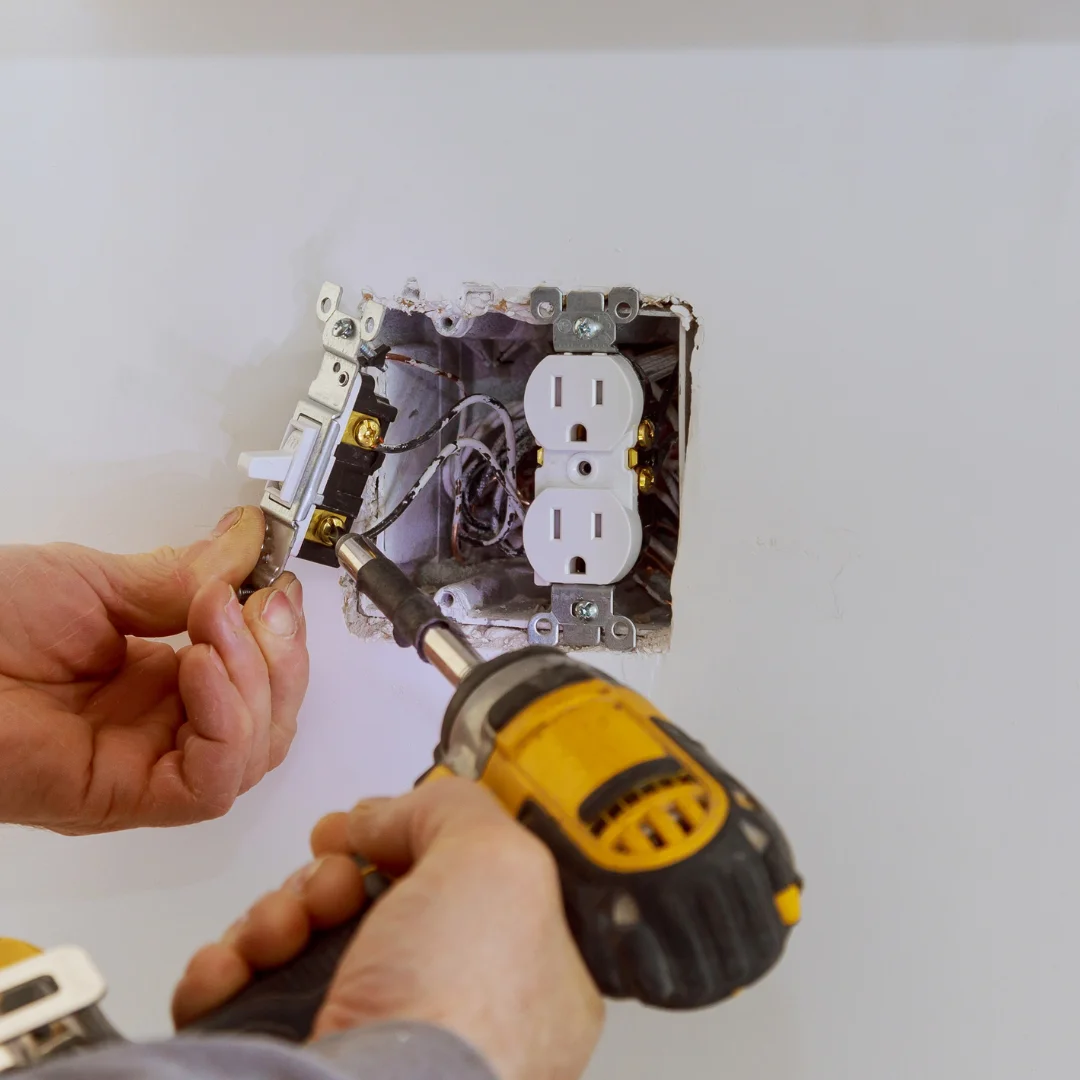
Electrician securing wiring inside a wall box during outlet installation
Daniel Vargas founded All Electric and has been in the trade for 9 years. Every job we do is covered under CO License #ME.0600978, we carry full insurance, and we back our labor with a 1-year warranty. Fred Ludlow left us a review that captures how we operate: 'Same day service! Was here in 3 hours. Very honest and charge was kept at the minimum.' Sean Frohling put it a different way: 'They found the underlying issues and fixed them and then explained what those issues were in a manner that I could understand.' That's the standard we hold ourselves to on every call, whether it's a single GFCI or a full home rewiring project. You can book directly online or call (720) 951-4619 and reach a real person during business hours.

GFCI vs Standard Outlet: What the Difference Actually Means
A standard duplex outlet delivers power. Full stop. It has no ability to detect an imbalance between the hot and neutral current, which is exactly what happens when electricity finds a path through a person instead of through the circuit. A GFCI monitors that balance 30 times per second. The moment it detects even a 5-milliamp difference, it trips in about 1/40th of a second. That's fast enough to prevent electrocution in most cases. What it can't do is protect against a short circuit between hot and neutral. That's the breaker's job. The two work together. Replacing a standard outlet with a GFCI in a wet location isn't an upgrade. It's the minimum safe configuration. If your bathroom or garage still has a standard outlet, call before someone gets hurt. We can also add GFCI protection at the panel level in some configurations, which protects an entire circuit without replacing every device.
wiring condition work, professional service in Denver, CO

What Can Affect the Total Cost of a GFCI Install

01

Wiring Condition

Back-stabbed connections, aluminum wiring, or deteriorated insulation all need correction before a new device goes in. That adds time and materials. We won't install on top of a hazard and call it done.

02

Grounded vs Ungrounded Circuits

Older two-wire circuits without a ground wire need special handling. A GFCI outlet is actually one of the NEC-approved methods for protecting an ungrounded circuit, but it has to be labeled correctly.

03

Number of Locations

A single bathroom outlet is one scope. A full kitchen countertop run, a garage, and two outdoor receptacles is a different project. Multi-location jobs are more cost-effective per outlet than single swaps.

04

Access and Box Conditions

Boxes that are overcrowded, cracked, or mounted in a tight space take more time to work safely. We don't force devices into boxes that aren't ready for them.

05

Code Corrections Required

If we open a box and find existing code violations, we'll tell you what they are and what it takes to correct them. We won't close the wall over a problem we know about.

06

Single Device vs. Load-Side Chain

One GFCI can protect multiple downstream outlets when wired through the load terminals. Fewer devices, same protection. We'll tell you when this is the right approach for your layout.

Schedule a GFCI Install or Get Your Questions Answered

GFCI protection is not optional in wet locations. If you're not sure whether your outlets are covered, find out now.

Frequently asked questions

How much does GFCI outlet installation typically cost?
Cost varies based on the number of outlets, the condition of the existing wiring, whether the circuit is grounded, and whether any code corrections are needed first. A single straightforward swap costs far less than a multi-location install that requires correcting back-stabbed connections or working on ungrounded two-wire circuits. We don't quote ranges that won't hold up on the actual job. Every job is different, contact All Electric for an accurate estimate.
What is the correct way to install a GFCI outlet so it protects downstream receptacles?
The incoming hot and neutral wires connect to the LINE terminals. Any downstream outlets you want to protect connect to the LOAD terminals. Using screw terminals rather than push-in stabs is essential for long-term reliability. The device then needs to be tested for proper trip and reset function, and downstream outlets need to be verified as protected. A GFCI wired only to the LINE terminals protects only itself, the downstream outlets get nothing.
Can a GFCI outlet be installed on an ungrounded two-wire circuit?
Yes. The NEC specifically permits a GFCI outlet as one of the accepted methods for updating ungrounded receptacles in older homes. The device must be labeled 'No Equipment Ground' at the outlet face and on any downstream receptacles it protects. This is common in homes built before the 1960s. It provides shock protection even without a ground wire, but it does not provide equipment grounding for sensitive electronics.
Why does my GFCI outlet trip for no obvious reason?
Nuisance tripping usually has one of three causes: a ground fault on a downstream appliance or device plugged into the load side, moisture intrusion in an outdoor or bathroom box, or a failing GFCI device that's degraded over time. Devices that trip frequently can also indicate a wiring fault elsewhere on the circuit. We don't recommend resetting and ignoring repeat trips. That pattern means something downstream needs to be found and fixed. It won't resolve itself.
How do I know if my kitchen or bathroom outlets are already GFCI protected?
Look for the TEST and RESET buttons on the outlet face. If they're there, it's a GFCI device. If not, check whether any nearby outlet has those buttons. A single GFCI wired through its LOAD terminals can protect multiple outlets on the same circuit. The easiest test: plug in a GFCI outlet tester (available at any hardware store) and press TEST. If the downstream outlets lose power, they're protected. If you're unsure, we can check during any service visit.
Does GFCI outlet installation require a permit?
In most jurisdictions, replacing an existing outlet with a GFCI device does not require a separate permit. Installing new circuits or adding outlets in locations that didn't previously have them may require a permit, depending on local authority requirements. All Electric handles permit applications where required and never recommends skipping them. Unpermitted electrical work can complicate a home sale and may void your homeowner's insurance in the event of a claim.

Related