

Chapter 01 · Panels & Service Entrance
Meter Loop Installation with Proper Grounding and Code Compliance
We coordinate directly with your utility company so your service connection passes inspection the first time.
Free estimate
Tell us what you need
A short form. It reaches a person here, not a call centre.
Grounding Electrical Service That Meets Utility Standards
The meter loop is where your property connects to the utility grid, and a properly grounded electrical service connection is not optional equipment. It's the foundation every circuit in your building depends on. All Electric handles meter loop installations under CO License #ME.0600978, fully insured, with a 1-year labor warranty included. If your weatherhead is damaged, your riser is deteriorating, or you're starting new construction and need a service connection from scratch, call (720) 951-4619 and we'll assess the scope before any work begins.
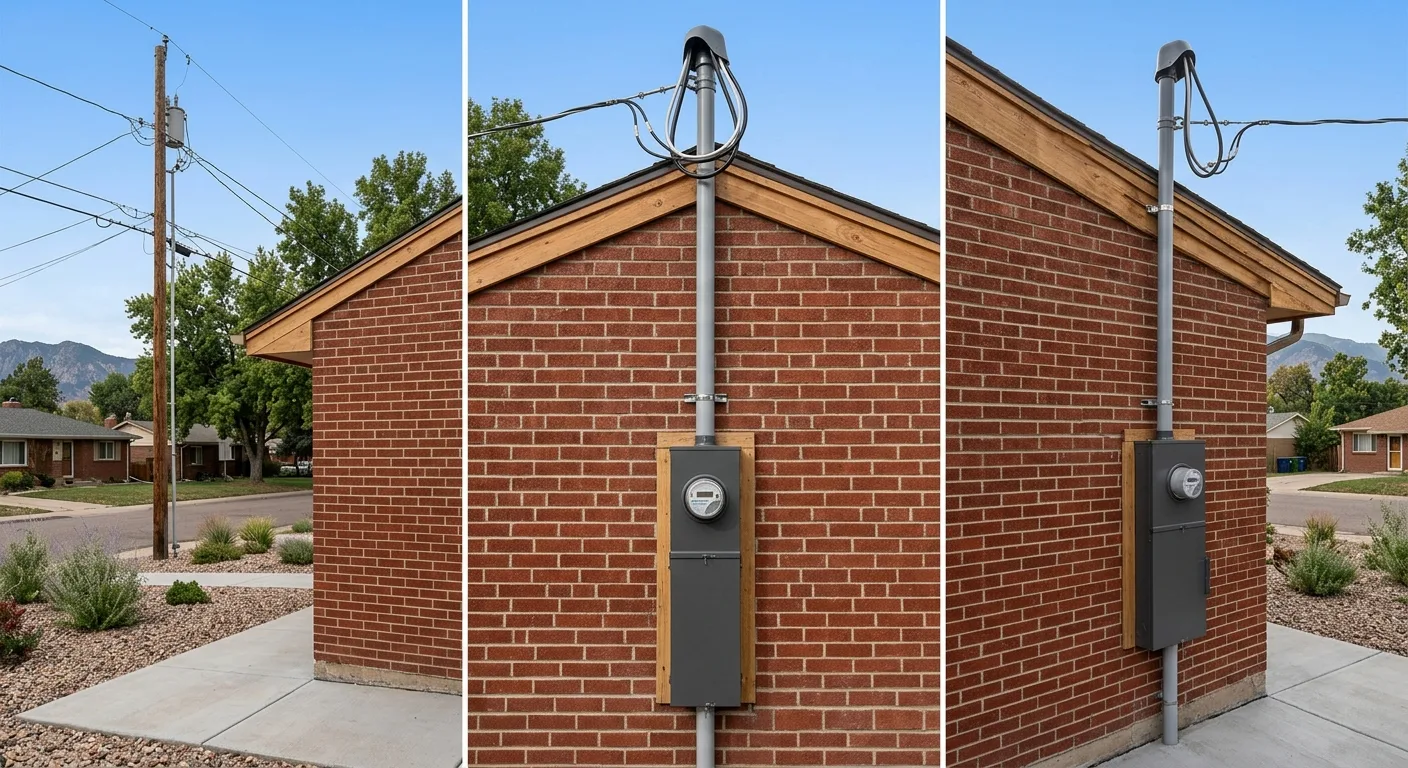
A meter loop installation covers the full path from the utility drop to your panel upgrades inside: weatherhead, service entrance conductors, meter base, and the grounding electrode system that ties everything to code. What drives the cost is the service size you need (100A, 200A, 400A), the height and material of the riser, whether the existing structure requires new conduit runs, and how far the utility's point of attachment sits from your panel location. Older homes served by overhead lines often need a full riser replacement alongside the loop work. Every job is different, contact All Electric for an accurate estimate.
What a Meter Loop Installation Actually Covers
Every component from the utility drop to your main panel has a role in a safe, code-compliant service connection.
Weatherhead and Service Entrance
The weatherhead is the point where the utility's conductors enter your riser. We size it correctly for your service amperage and position it so water cannot follow the conductors into the conduit. Flimsy weatherheads crack in Colorado winters. We don't use them.
Service Entrance Conductors
The conductors running from the weatherhead down to the meter base carry your full service load. We pull the correct wire gauge for your amperage rating, secured in weatherproof conduit, run tight against the structure.
Meter Base and Socket
The meter base must meet your utility's exact socket type and mounting requirements. We spec the right base before ordering materials, so there's no back-and-forth after the inspector shows up.
Grounding Electrode System
Proper grounding ties your service to earth through grounding rods and, where required, to the water service pipe. This is the part of the installation most DIY attempts get wrong. A missing or undersized ground is a code violation and a safety hazard.
Utility Coordination and Permit
We pull the permit, schedule the inspection, and coordinate directly with the utility for reconnection. You don't have to navigate the utility company's process yourself. We've done it enough times to know what each utility requires.
Riser Conduit and Mounting Hardware
The conduit protects the conductors from weather and physical damage. We secure it to the structure with proper standoffs and make sure the riser height meets the utility's minimum clearance requirements from grade.
Our Process
How We Handle Your Meter Loop Job
-
Step 1: Site Evaluation
We look at your existing service entrance, the utility's point of attachment, and what your panel situation requires. That assessment drives the material spec and the permit application.
-
Step 2: Permit, Install, and Inspection
We pull the required permit, complete the installation to NEC and utility standards, and schedule the inspection. We're on site when the inspector arrives.
-
Step 3: Utility Reconnection
After the inspection clears, we coordinate with the utility to restore power. We stay until the meter is seated and your service is confirmed live before we close out the job.
Why It Matters
A Grounding Failure Isn't a Minor Problem
When Your Meter Loop Needs Replacement or Upgrade
New Construction Service Connection
No existing loop exists yet. We install the complete service entrance assembly, coordinating with the utility before rough-in so the point of attachment is in the right location before drywall goes up.
Storm or Impact Damage
A tree limb, falling ice, or a vehicle strike can shear a weatherhead or crack conduit. Utility companies won't reconnect to a damaged service entrance. We repair or replace it and handle the reconnection coordination.
Panel Upgrade to 200A or 400A Service
If your panel upgrade increases your service amperage, the existing meter loop and service entrance conductors must be upsized to match. You can't run 200A conductors through a 100A weatherhead and conduit.
Failed Inspection or Code Violation
Homes going through sale, refinance, or a rental inspection sometimes surface service entrance violations: undersized grounding, corroded connections, or non-compliant meter bases. We correct them with permits so the documentation is clean.
Why homeowners trust us
All Electric's Work Stands Behind a Warranty
9 years of licensed electrical work in the Front Range, 468 Google reviews averaging 4.9 stars, and a 1-year labor warranty on every installation.
-
CO License #ME.0600978
Verified electrical contractor credential, on file with the state
Verify with the state -
Fully insured
Liability coverage on every job, every day
-
1-year labor warranty
Covers the work we perform, in writing
-
Utility coordination included
We handle the permit and the reconnection scheduling
Frequently asked questions
Not answered here? Call (720) 951-4619 and ask the electrician.
What is a meter loop and what does a proper grounding electrical service connection require?
Do I need a permit for a meter loop installation in Colorado?
How long does a meter loop installation take from start to utility reconnect?
Can I upgrade my meter loop to 200A or 400A service at the same time as a panel upgrade?
What causes a meter loop to fail or get flagged during a home inspection?
Does All Electric coordinate with the utility company, or do I have to do that myself?
Schedule Your Meter Loop Assessment
If your service entrance is damaged, outdated, or failing inspection, don't leave the utility power off longer than necessary.